 Yard
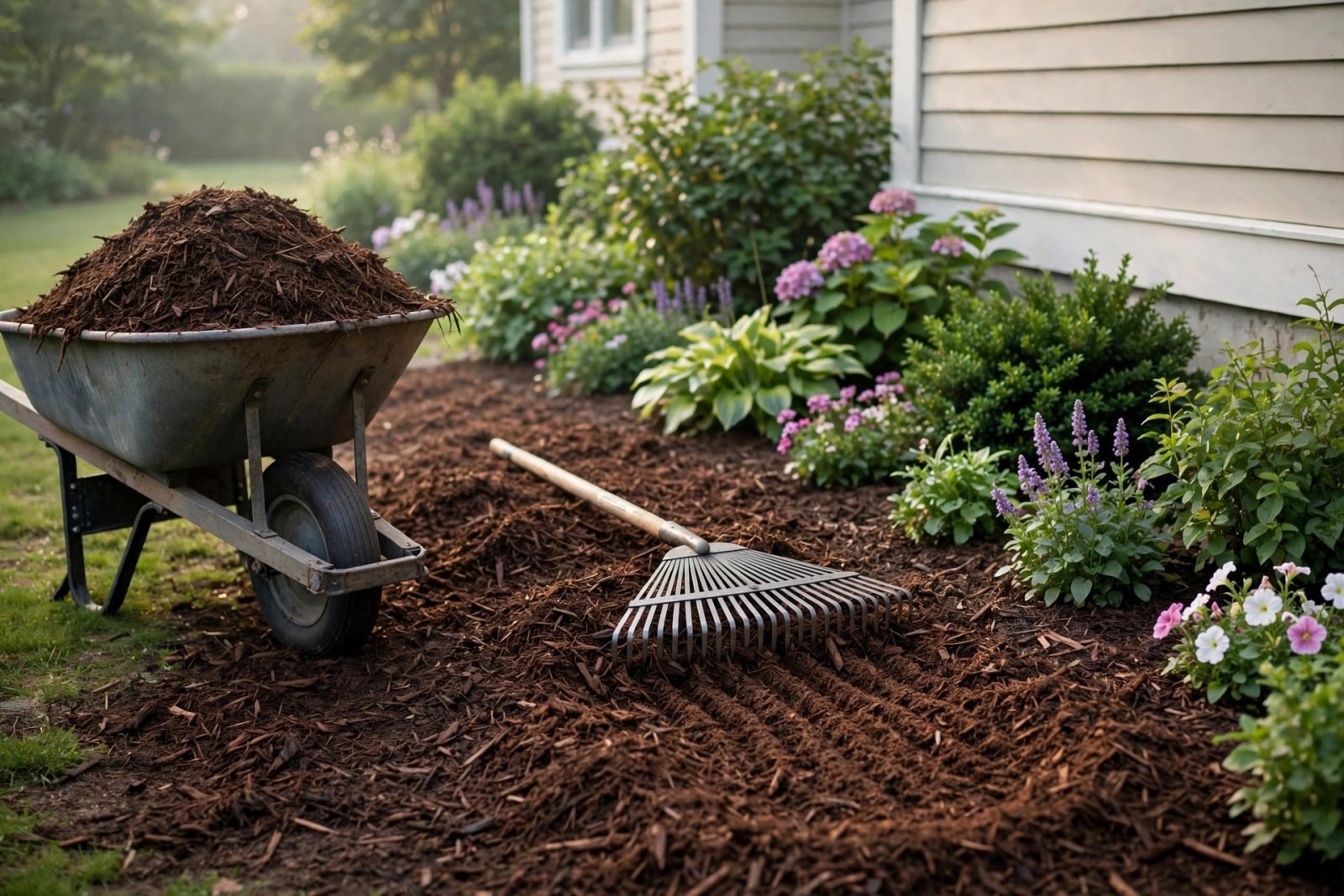
Mulch by bed size (2 cu ft bags and bulk)
Every mulch calculation is the same three steps: area in square feet, times depth in feet, gives volume; divide by 27 for cubic yards or by the bag size for bags. A shortcut for bulk orders: square feet x depth in inches / 324 = cubic yards. Here is the maths done for the most common bed sizes, with the bag count rounded up:
| Bed size | Depth | Bags (2 cu ft) | Bulk (cubic yards) |
|---|---|---|---|
| 4 x 8 ft (32 sq ft) | 2 in | 3 | 0.20 |
| 4 x 8 ft (32 sq ft) | 3 in | 4 | 0.30 |
| 10 x 10 ft (100 sq ft) | 2 in | 9 | 0.62 |
| 10 x 10 ft (100 sq ft) | 3 in | 13 | 0.93 |
| 10 x 10 ft (100 sq ft) | 4 in | 17 | 1.23 |
| 10 x 20 ft (200 sq ft) | 2 in | 17 | 1.23 |
| 10 x 20 ft (200 sq ft) | 3 in | 25 | 1.85 |
| 10 x 20 ft (200 sq ft) | 4 in | 34 | 2.47 |
The table assumes a clean, empty bed. If last year's mulch is still there, measure it and subtract: 1 inch already down means you only buy 2 inches to reach 3. Curved beds get measured as a rectangle of their average width; mulch is forgiving, so rounding up is the right error. Your bed is not in the table? The mulch calculator runs the same maths for any shape in seconds.
What each bag size actually covers
Mulch bags are sold by volume, and the label's square-foot coverage changes with depth because depth is the third dimension of the same box. The formula: coverage = bag volume in cu ft x 12 / depth in inches.
| Bag size | 2 in deep | 3 in deep | 4 in deep | Bags per cubic yard |
|---|---|---|---|---|
| 1.5 cu ft | 9 sq ft | 6 sq ft | 4.5 sq ft | 18 |
| 2 cu ft | 12 sq ft | 8 sq ft | 6 sq ft | 13.5 |
| 3 cu ft | 18 sq ft | 12 sq ft | 9 sq ft | 9 |
The common mistake is reading a 1.5 cu ft bag as a 2 cu ft bag; the two bags look nearly identical on the pallet, but the conversion jumps from 13.5 to 18 bags per yard. Check the cubic feet printed on the bag before you do the maths. And in bulk terms, one cubic yard covers 162 sq ft at 2 in, 108 sq ft at 3 in, and 81 sq ft at 4 in.
The right depth for every job
Depth is not one number; it changes with the plants. University extension guidance lands on the same ranges everywhere:
| Where | Depth | Why this number |
|---|---|---|
| Flower beds and perennials | 2 to 3 in | Weed suppression and moisture without burying shallow crowns |
| Vegetable gardens | 2 to 3 in (1 to 2 in for young seedlings) | Thick mulch cools spring soil and slows seedlings; add more mid-season |
| Trees and shrubs | 3 to 4 in | Maximum root protection; keep mulch 6 in back from the trunk, donut not volcano |
| Garden paths | 3 to 4 in | Built for foot traffic and weed blocking where roots are not competing |
Two rules that never change: never exceed 4 inches total, because deep mulch starves roots of oxygen and traps moisture against bark; and never pile mulch against a trunk or stem. The mulch volcano around trees is the most common over-mulching mistake in home landscaping, and it causes rot and pest problems that dwarf the cost of the mulch itself.
Worked examples
Example A: a 4 x 8 ft flower bed, 3 inches deep. Volume = 32 x (3 / 12) = 8 cubic feet. Bags of 2 cu ft: 8 / 2 = 4 bags, rounded up. In bulk: 32 x 3 / 324 = 0.30 cubic yards. This is a pure bag job; delivery would cost more than the mulch.
Example B: a 10 x 20 ft foundation bed, 3 inches deep. Volume = 200 x 0.25 = 50 cubic feet, which is 1.85 cubic yards, so order 2 yards of bulk. In bags that is 25 two-cubic-foot bags. At about $5 a bag that is $125 of bags versus roughly $76 of bulk plus a delivery fee, which is exactly the zone where the break-even below decides for you.
Bags or bulk: the break-even
Bags and bulk are the same material at two different prices. Bagged mulch runs about $3 to $8 per 2 cu ft bag in 2026, which works out to roughly $47 to $95 per cubic yard equivalent. Bulk shredded hardwood runs about $25 to $55 per yard at a landscape supplier, before delivery. Delivery fees commonly run $50 to $140 flat.
| Cubic yards | Cost in bags ($5 each) | Bulk ($38/yd) + $75 delivery | Winner |
|---|---|---|---|
| 0.5 | ~$34 (7 bags) | ~$94 | Bags |
| 1 | ~$68 (14 bags) | ~$113 | Bags |
| 2 | ~$135 (27 bags) | ~$151 | Roughly equal |
| 3 | ~$203 (41 bags) | ~$189 | Bulk |
| 5 | ~$338 (68 bags) | ~$265 | Bulk |
The decision rule: under about 1.5 yards, bags almost always win because the delivery fee eats the bulk discount. Around 2 to 2.5 yards the two cross over. Above that, bulk wins clearly, and it wins faster if you can pick up yourself (no delivery fee drops the break-even to about 1 yard). Bags also win on logistics alone: they stack in an SUV, they carry to back beds without wheelbarrowing from the driveway, and one cubic yard of mulch weighs 800 to 1,000 lb, which is real hauling capacity for self-pickup. Prices are US 2026 ranges from supplier and retail listings, regional, not quotes; the bag vs bulk guide runs the same per-yard comparison for gravel and soil.