 Yard
YardCalculate pavers & base
How these numbers are worked out: methodology & data sources
How to use the paver calculator
- Enter the patio or walkway size in feet (circle and triangle shapes are supported).
- Enter the size of one paver in inches, as printed on the product label.
- Add 5–10% for cuts and breakage (use more for diagonal or herringbone patterns).
- Set the base and sand depths to get your gravel and sand quantities.
Paver formulas
Base (yd³) = Area × base depth (in) ÷ 12 ÷ 27
Sand (yd³) = Area × sand depth (in) ÷ 12 ÷ 27
Worked example
A 12 ft × 16 ft patio (192 sq ft) using 4 × 8 in pavers: each paver is 0.222 sq ft, so you need 864 pavers, or 951 pavers with 10% extra. A 4 in base is 64 cubic feet = 2.37 cubic yards (about 3.3 tons). One inch of bedding sand is 16 cubic feet = 0.59 cubic yards (about 0.8 tons).
Pavers per square foot by size
| Paver size | Pavers per sq ft |
|---|---|
| 4 × 8 in | 4.5 |
| 6 × 6 in | 4 |
| 6 × 9 in | 2.67 |
| 12 × 12 in | 1 |
| 16 × 16 in | 0.56 |
| 24 × 24 in | 0.25 |
These figures ignore joint gaps and waste. Many pavers are sold by the square foot or by the pallet – the manufacturer's coverage figure is the best source.
Base and sand depth guide
| Use | Compacted base | Bedding sand |
|---|---|---|
| Walkway | About 4 in | About 1 in |
| Patio | About 4–6 in | About 1 in |
| Driveway | About 8–12 in | About 1 in |
Clay soil, frost and heavy loads may need a deeper base. Follow the paver manufacturer's installation guide and local practice.
Step-by-step overview
Excavate, compact the soil, lay and compact the base in layers, screed the sand, set the pavers, cut the edges, install edge restraints, then sweep in joint sand. Our paver walkway guide walks through each step with a material list.
Keep going
Related calculators
Frequently Asked Questions
How many pavers do I need for a 10x10 patio?
100 sq ft with 4 × 8 in pavers is 450 pavers, or about 495 with 10% extra.
How much paver base do I need?
At 4 inches deep, each 100 sq ft needs about 1.23 cubic yards (roughly 1.7 tons) of base gravel.
How much sand do I need under pavers?
About 1 inch of bedding sand: 0.31 cubic yards per 100 sq ft.
Which laying pattern wastes the least material?
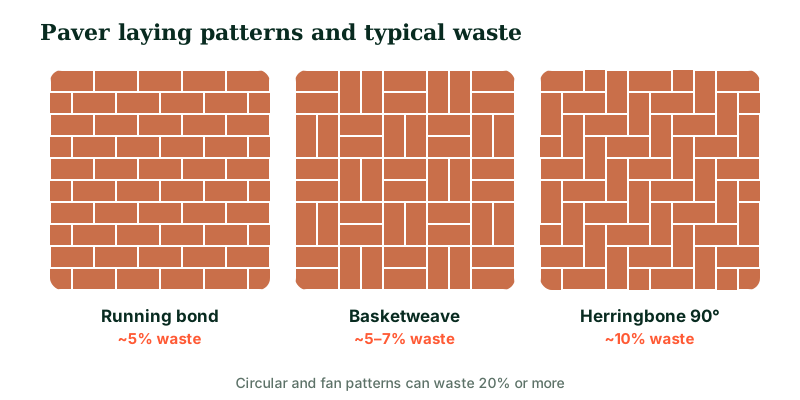
Running bond (bricklayer) wastes the least – about 5% – because only the edges need cuts. Basketweave is similar at around 5–7%. Herringbone needs cuts along every edge: about 10% at 90° and up to 15% at 45°. Circular and fan patterns can waste 20% or more. The pattern selector above sets the waste for you; how to lay a paver walkway has layout tips.
What is polymeric sand?
Joint sand with binders that harden when wet. Coverage depends on paver size and joint width, so use the bag's coverage chart.
How many pavers do I need for a 20×20 patio?
A 20 × 20 ft patio is 400 sq ft. Standard 4 × 8 in pavers cover 0.222 sq ft each (4.5 per sq ft), so you need 1,800 pavers before waste – about 1,890 in running bond (+5%) or 1,980 in herringbone (+10%). Larger 6 × 9 in pavers need about 1,067 before waste. Enter your paver size above, and size the base gravel with the gravel calculator if you buy it separately.
How many pavers come on a pallet?
It depends on paver size and thickness, so check the manufacturer's pallet sheet – a pallet of standard 4 × 8 in pavers often covers somewhere around 100–150 sq ft, and larger slabs come fewer to a pallet. Order full pallets where you can and buy everything from the same production batch, because color can vary between batches. Mix pavers from several pallets as you lay them. The bag vs bulk guide covers ordering the base and sand.
How much joint / polymeric sand do I need?
It depends on joint width, paver size and thickness. As a guide, a 400 sq ft patio of 4 × 8 in pavers, 2⅜ in thick, with ⅛ in joints needs about 370 lb of sand – roughly eight 50 lb bags. Wider joints and smaller pavers need more. Enter your joint width and thickness above for an estimate, then check the coverage chart on the bag. Our methodology page explains the joint model.
Do I need edge restraint for pavers?
Yes. Without a restraint, the outer pavers creep outward, joints open and the surface loosens. Use plastic or aluminum paver edging spiked into the base, a concrete curb, or a border course set in concrete. The only exception is where pavers butt against a solid structure such as a house foundation. The compacted base should extend 6 inches or more past the edge so the restraint has something to sit on – see the walkway guide.
How deep should the base be for a patio vs a driveway?
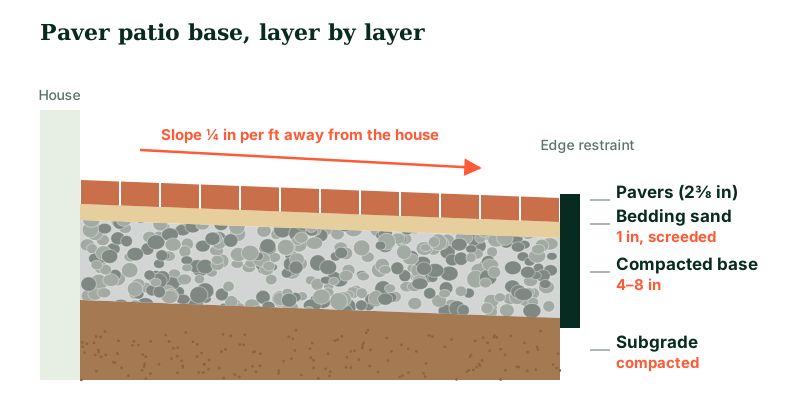
For patios and walkways, a common recommendation is about 4 inches of compacted crushed-stone base on well-drained soil, or 6 inches on clay or in cold climates. Driveways need 6–8 inches or more. Interlocking Concrete Pavement Institute (ICPI) guidance and your paver manufacturer's instructions are the references contractors use. The project-type selector above sets these defaults; see the base cross-section diagram.
How much slope do pavers need for drainage?
Slope the surface at least ¼ inch per foot (about 2%) away from the house – a 3 inch drop over a 12 ft patio. Build the slope into the compacted base, not the bedding sand, so the sand stays an even 1 inch. Use the cubic yard calculator if you need extra base to build up the low side.