 Yard
YardCalculate topsoil
How these numbers are worked out: methodology & data sources
How to use the topsoil calculator
- Enter the size of the area in feet (or choose circle/triangle).
- Enter the depth of soil you plan to add.
- Keep 10% extra: loose soil settles after watering and rolling.
- Read the result in cubic yards (bulk), tons (if sold by weight) or bags.
Topsoil formula
Tons = Cubic yards × tons per cubic yard
Bags = Cubic feet ÷ bag size
Worked example
A 20 ft × 30 ft lawn area with 4 inches of new topsoil: 600 sq ft × 4 ÷ 12 = 200 cubic feet = 7.41 cubic yards. At 1.1 tons per yard that is about 8.15 tons.
Recommended topsoil depth
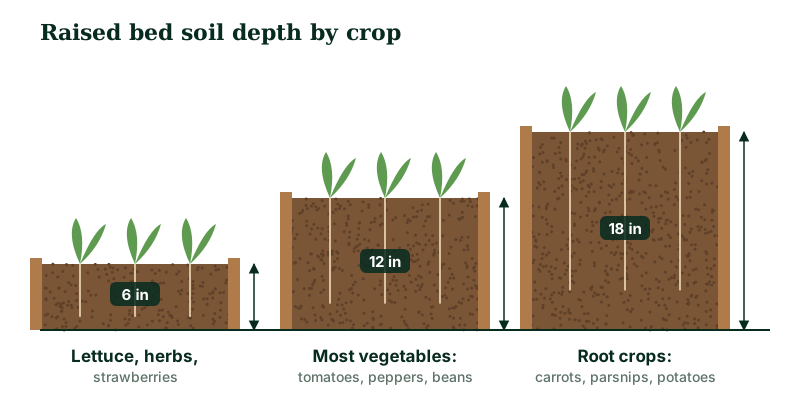
| Project | Typical depth |
|---|---|
| New lawn from seed or sod | 4–6 in |
| Top-dressing an existing lawn | ¼–½ in |
| New flower bed | 6–8 in |
| Vegetable garden | 8–12 in |
| Raised bed | Full bed height – see the raised bed soil guide |
| Filling low spots | Depth of the hole + 10–20% for settling |
Bags of topsoil per cubic yard
| Bag size | Bags per cubic yard |
|---|---|
| 0.75 cu ft | 36 |
| 1 cu ft | 27 |
| 1.5 cu ft | 18 |
| 2 cu ft | 13.5 |
Bagged soil is often labeled in cubic feet or by weight. If a bag only shows pounds, ask the store for its volume.
Topsoil vs fill dirt vs garden mix vs compost
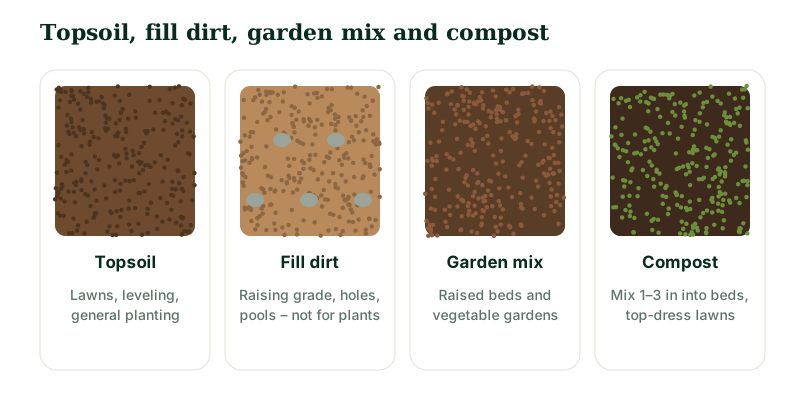
These four materials look similar in a pile but do very different jobs. Buying the wrong one is the most common soil mistake – fill dirt in a vegetable bed, or expensive garden mix used to fill a hole.
| Material | What it is | Use it for | Avoid using it for |
|---|---|---|---|
| Topsoil | The upper soil layer, with some organic matter; usually screened | Lawns, leveling low spots, general planting | Deep structural fill under slabs |
| Fill dirt | Subsoil with little organic matter; may hold clay and stones | Raising grade, filling holes and pools (compacted) | Growing plants |
| Garden mix | Topsoil blended with compost, sometimes sand or fine bark | Raised beds, vegetable and flower gardens | Filling large holes (it costs more and settles) |
| Compost | Decomposed organic matter | Mixing 1–3 in into beds, top-dressing lawns | Filling a bed on its own (it shrinks a lot) |
For grading and holes, use the fill dirt calculator, which adds a compaction allowance. For beds, see how much soil for a raised bed.
Keep going
Related calculators
Frequently Asked Questions
How much topsoil do I need for 1,000 square feet?
At 4 inches deep, 1,000 sq ft needs 333 cubic feet, which is about 12.3 cubic yards before extra.
How much does a cubic yard of topsoil weigh?
Dry, screened topsoil usually weighs about 1.0–1.3 tons per cubic yard (2,000–2,600 lb). Wet topsoil can reach 1.5 tons or more, and soil with lots of compost weighs less. The calculator uses 1.1 tons by default – change it if your supplier quotes a different figure. More materials are in the material weight chart.
How many bags of topsoil make a yard?
36 bags of 0.75 cu ft, or 27 bags of 1 cu ft.
How deep should topsoil be for grass?
About 4–6 inches is a common target for a new lawn.
Do I need to account for settling?
Yes. Loose, delivered topsoil settles as it is watered and walked on – commonly 10–20%, more for very fluffy soil or deep beds. The calculator adds 10% by default; use 15–20% for raised beds and deep fills, or plan a top-up after the first season. Fill that will be compacted needs more again – see the fill dirt calculator.
What is the difference between topsoil, fill dirt, garden mix and compost?
Topsoil is the upper layer of soil and grows lawns and plants. Fill dirt is subsoil with little organic matter, used to raise grade. Garden mix is topsoil blended with compost for beds. Compost is decomposed organic matter you mix into soil rather than use on its own. See the comparison table above and the fill dirt calculator for grading jobs.
How much topsoil do I need for a 20×20 ft garden at 4 inches?
A 20 × 20 ft area is 400 sq ft. At 4 inches (0.333 ft) that is 133.3 cubic feet, or about 4.94 cubic yards – roughly 5.4 tons at 1.1 tons per yard. Add 10% for settling and order about 5.5 yards. For raised beds, see how much soil for a raised bed.
How many wheelbarrow loads are in a cubic yard?
A 6 cu ft wheelbarrow filled level holds 4.5 loads per cubic yard. Soil is heavy, though – a level 6 cu ft load of topsoil weighs around 450–500 lb – so most people fill a barrow to 3–4 cu ft, which works out to 7–9 trips per yard. Set your real load size in the wheelbarrow field above. The weight chart shows how heavy each material is.
Should I buy topsoil in bags or in bulk?
Bags are convenient for small jobs under about half a yard (roughly 18 bags of 0.75 cu ft). Beyond that, bulk is usually much cheaper: delivered bulk topsoil is often quoted around $25–60 per cubic yard plus a delivery fee, while the same yard in 0.75 cu ft bags (36 bags) usually costs several times more. Our bag vs bulk buying guide shows how to find the break-even.
Can I put topsoil over existing grass?
A thin layer – about ¼ to ½ inch – can be spread over a lawn to level small dips (top-dressing), and the grass grows through. Thicker layers smother the grass, so for a new lawn or deep fill, remove or kill the turf first. Enter ¼ inch above to size a top-dressing, and use the cubic yard calculator for irregular areas.