 Yard
YardWhat is a mulch volcano?
A mulch volcano is a cone of mulch heaped up around the base of a tree, often a foot or more deep against the bark. It usually starts with good intentions: mulch looks tidy, and every spring another layer goes on top of last year's. After a few seasons the pile is deep, the trunk flare has disappeared and the tree looks like it is growing out of a mound.
Healthy trees widen at the base where the trunk meets the roots. This root flare should be visible above the soil and mulch. If a tree goes straight into the ground like a telephone pole, it is either planted too deep or buried in mulch.
Why mulch volcanoes harm trees
- Wet bark rots. Bark protects the living tissue underneath, but it is not built to stay wet. Mulch held against the trunk keeps it damp, which invites fungal disease and decay.
- Pests and rodents move in. A deep, warm pile against the trunk gives voles and mice cover while they chew the bark, and insects find an easy way in.
- Roots grow in the wrong place. Roots can grow up into a deep pile of moist mulch and then circle the trunk. Over years these girdling roots tighten and strangle the tree.
- Roots run short of air and water. Very deep mulch, especially fine or matted mulch, can shed water like a roof and starve the roots below of oxygen.
The damage is slow, which is why volcanoes are so common: a tree can decline for years before the cause is obvious.
What a good tree ring looks like
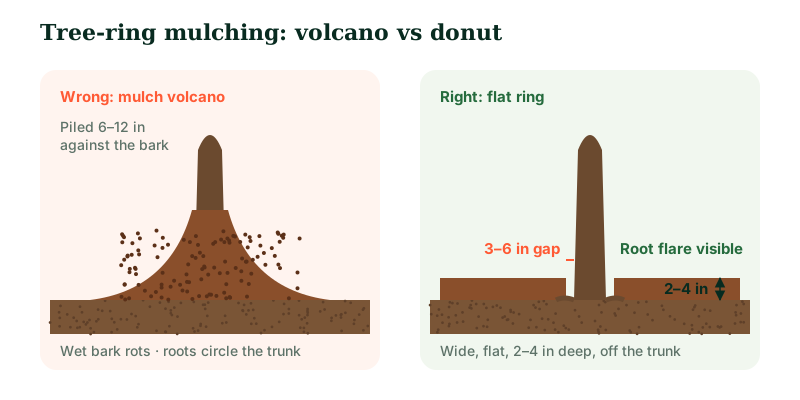
Think of a doughnut, not a volcano. A well-mulched tree has:
- A wide ring. The wider the better – ideally out toward the drip line (the edge of the canopy). For young trees, a ring 3–4 ft across is a good start; for established trees, 6–10 ft or more.
- A flat, even layer 2–4 inches deep. Two inches for fine mulch, up to four for coarse wood chips.
- A gap at the trunk. Pull mulch back 3–6 inches from the bark so the root flare is visible and the trunk stays dry.
Mulch under trees conserves moisture, evens out soil temperature, keeps mowers and string trimmers away from the bark and feeds the soil as it breaks down. You get all of that from a thin, wide layer.
How much mulch does a tree ring need?
A ring is a circle, so its area is π × radius². Multiply by the depth in feet for cubic feet. The table assumes a 3 inch layer:
| Ring diameter | Area | Mulch at 3 in | 2 cu ft bags | Cubic yards |
|---|---|---|---|---|
| 4 ft | 12.6 sq ft | 3.1 cu ft | 2 | 0.12 |
| 6 ft | 28.3 sq ft | 7.1 cu ft | 4 | 0.26 |
| 8 ft | 50.3 sq ft | 12.6 cu ft | 7 | 0.47 |
| 10 ft | 78.5 sq ft | 19.6 cu ft | 10 | 0.73 |
The small gap at the trunk barely changes the total, so you can ignore it. For several trees, add the rings together – or pick the circle shape in the mulch calculator, which also shows bulk vs bagged cost. Mulching more than four or five large trees usually makes bulk cheaper; see the bag vs bulk guide.
How to fix an existing mulch volcano
- Pull the mulch back. Use a rake or gloved hands to pull the pile away from the trunk until you find the root flare. Work gently – the bark under a volcano can be soft.
- Look at the bark and roots. Check for soft, discolored bark, and for roots growing up into the old mulch or wrapping around the trunk. Small circling roots can be cut; large ones near the trunk are a job for a certified arborist.
- Spread the excess outward. Rake the extra mulch into a wider ring rather than throwing it away. A volcano often holds enough mulch for a ring twice as wide.
- Level to 2–4 inches. Check the depth in a few places with a ruler and leave the 3–6 inch gap at the trunk.
Leave the flare exposed from now on. Next spring, check the depth before adding anything – most rings only need about an inch on top.
Which mulch is best for trees?
| Mulch | Good for trees? | Notes |
|---|---|---|
| Wood chips (arborist chips) | Excellent | Coarse, airy and slow to break down; tree services often give them away |
| Shredded hardwood | Good | Knits together and stays put on slopes; keep it to 2–3 in so it does not mat |
| Pine bark nuggets | Good | Long-lasting; can float away in heavy rain |
| Pine straw | Good | Light and airy; settles, so start at 3–4 in |
| Rubber mulch | Not ideal | Does not feed the soil and heats up in sun |
| Stone / rock | Not ideal | Reflects heat onto the trunk; better for beds than tree rings |
Avoid fresh grass clippings piled thickly – they mat and smell – and avoid landscape fabric under tree rings, which stops the mulch feeding the soil.
Mulching around shrubs and perennials
The same rules apply to everything with a woody stem. Keep mulch an inch or two back from shrub stems and the crowns of perennials, spread it 2–3 inches deep across the whole bed, and never bury the point where stems meet the soil. Roses, hydrangeas and young shrubs suffer from piled mulch just as trees do. In a mixed bed, measure the whole bed rather than each plant – the mulch calculator handles rectangles, circles and triangles, so you can split an irregular bed into simple shapes and add them up.
When to mulch trees
Late spring, once the soil has warmed, is the classic time, because mulch holds in moisture for the summer. Fall works too and protects roots over winter. Newly planted trees benefit most: a wide ring means less competition from grass, which can cut a young tree's growth sharply in its first few years.
Quick checklist
- Root flare visible? Yes.
- Mulch 3–6 inches back from the bark? Yes.
- Layer 2–4 inches, flat, not mounded? Yes.
- Ring as wide as practical? Yes.
Size the job with the mulch calculator, and see the material weight chart if you are hauling it yourself.
Frequently Asked Questions
How far should mulch be from a tree trunk?
Keep mulch 3–6 inches away from the trunk so the bark stays dry and the root flare is visible. Spread it outward in a wide ring instead. The mulch calculator sizes the ring.
How deep should mulch be around a tree?
About 2–4 inches – 2 for fine mulch, up to 4 for coarse wood chips. Deeper layers can starve roots of air and water.
Can a mulch volcano kill a tree?
Over years, yes. Constantly wet bark invites rot and pests, and roots that grow up into the pile can circle and girdle the trunk. Pull the mulch back and check the roots, or call a certified arborist if large roots are circling.
How much mulch do I need for a tree ring?
Area = π × radius², times depth. An 8 ft wide ring at 3 inches takes about 12.6 cubic feet, or 7 bags of 2 cu ft. See the table above or use the circle shape in the mulch calculator.